

The Exposome Booster Program
© Copyright: 2012 A.Vågen
This Exposome Booster Program aims to bring together the scientific community with diverse expertise working on this priority topic with the aim of developing new, innovative projects. The Exposome Booster Program has €1.5 million in Inserm funding for a period of three years.
The Exposome : A Priority Area
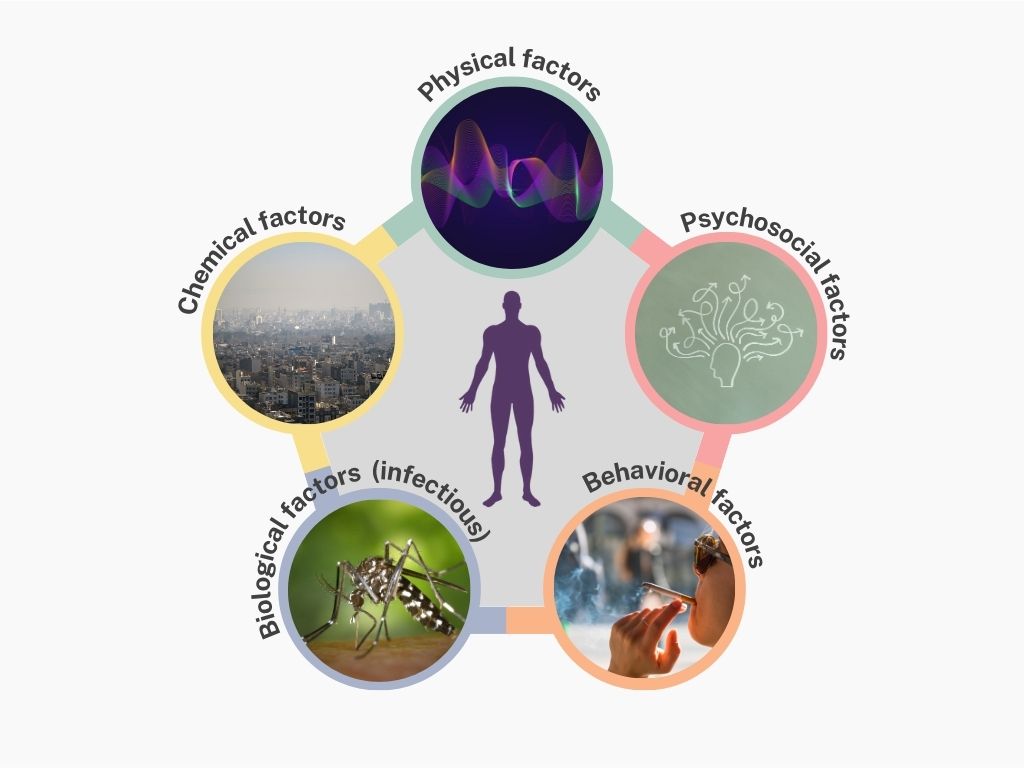
© Copyrights: Behavioral factors: 2017 S. Nilsson ; Biological factors: 2002 J. Gathany CDC ; Chemical factors: 2018 R. Saffari ; Physical factors: Image designed by Freepik.
The exposome is a concept that encompasses all the exposures an individual faces throughout their lifetime—from conception to death. These exposures fall into several categories:
- Biological factors relate to the body’s interactions with living agents;
- Physical factors refer to non-chemical environmental elements that influence health;
- Chemical factors include all harmful substances the body may be exposed to;
- Behavioral factors result from lifestyle choices and habits;
- Psychosocial factors include the social and emotional conditions that affect mental and physical health.
These exposures complexly influence metabolism, gene expression, and immune responses, thereby affecting susceptibility to various diseases, including chronic illnesses, cancer, mental health disorders, and cardiovascular diseases.
Exposome research aims to better understand how these multiple exposure factors interact and impact human health, to inform the development of more effective and personalized prevention and treatment strategies, and to ultimately improve public health.
The booster program combines several approaches (epidemiology, biostatistics, toxicology, systems biology) to identify associations between exposome components and health outcomes at different scales (geographic or population-level), and to better define causal links—through methodological development or biomarker characterization. The program encompasses both fundamental research and the development of new in silico tools (e.g., biostatistics, Adverse Outcome Pathways (AOPs)) suited to institutional and regulatory frameworks.
Building a Scientific Community
This booster program is composed of three scientific coordinators and their teams, along with ten partner institutions, forming a large community focused on exposome research.
International symposia will be organized as part of the program, alongside activities aimed at engaging the community, raising awareness among students about this research area, and disseminating knowledge. This program presents a unique opportunity for participating researchers to initiate and strengthen a scientific community dedicated to the exposome.
A Specific Program Governance Structure
Several committees have been established for the program:
- The International Scientific Expert Committee, responsible for evaluating and selecting projects submitted through the call for proposals, providing strategic recommendations for the program, and assessing the program at the end of the three years.
- The Program’s Scientific Committee, which oversees the scientific progress of the program. It is composed of three members: Cyrille Delpierre, Xavier Coumoul, and Rodolphe Thiébaut.
- The Program Steering Committee, which manages the operational aspects of the program and approves proposals made by the Scientific Committee. It includes the scientific coordinator, the program manager, and the director of Inserm’s Strategic Programs Department.
- The Scientific Consortium of the Booster Program, whose members commit to actively participating in the program’s monitoring procedures and in community engagement actions. The consortium includes all team members involved in each of the selected projects from the call for proposals.
Considering the Carbon Footprint of Program Activities
The Exposome Booster Program is actively committed to measuring and reducing the environmental impact of its activities. A Greenhouse Gas Emissions (GHG) assessment has been implemented to evaluate the program’s carbon footprint over its entire duration. This effort covers various aspects, including emissions from infrastructure used by research teams, purchases of materials and services, business travel, commuting, and food consumption.
Thanks to the collaboration of everyone involved in the program, data is being analyzed using the GES 1point5 tool developed by the French research collective Labo 1point5. This assessment will help identify the main sources of emissions and support the implementation of targeted actions to reduce the program’s carbon footprint.
This initiative is particularly innovative within Inserm and will serve as a reproducible model for reducing the carbon impact of future Inserm research programs.
Inserm Booster Programs
In 2023, Inserm launched five booster programs. This strategic initiative builds on the transversal programs first launched by the Institute in 2016. Current booster programs include:
- Climate Change and Health (2023)
- Exposome (2023)
- Mecacell3D (2022)
- Neurotechnologies (2023)
- Future Surgical and Interventional (2023)
 Programme d'impulsion Exposome